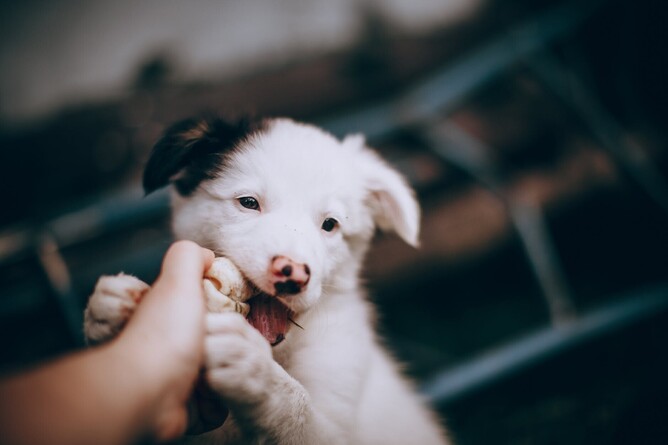
If you've ever lived through puppy teething, you'll know it can be quite an experience!
This stage can be stressful for both puppy and guardian. I can certainly remember going through it with Willow - in fact, I'm still slightly traumatised by it as it seemed to go on forever!
When does puppy teething happen?
Puppies are born without teeth, but their baby teeth begin to come through during the first few weeks of life. By around 6–8 weeks, most puppies will have their full set of baby teeth.
The next stage is when those baby teeth begin to fall out and their adult teeth start coming through. This usually begins at around 3–4 months of age and continues through to approximately 6–7 months, although the timing can vary between individual puppies.
And unfortunately, this is often when the chewing really ramps up!
Why do puppies chew so much when they're teething?
Chewing is a natural behaviour for puppies, and during teething it can help relieve some of the discomfort and pressure associated with their developing teeth and gums.
Unfortunately, nothing is necessarily off limits. People, furniture and pretty much anything within reach can suddenly become a potential chew toy.
Out of all my dogs, Willow was by far the worst. I remember coming home to find little teeth marks everywhere. Her specialty was wood - nothing was safe, including the banisters on the deck!
She even took a liking to the legs of the furniture. Thankfully, shoes and clothes didn't seem to hold quite the same appeal!
My current puppy, Joe, has been quite different. His preference has been blankets and softer textures rather than wood or furniture. He also has a much softer mouth than Willow did, so even though they've both gone through the same developmental stage, their experience of teething has looked quite different.
And this is exactly why I believe it is so important to look at the individual puppy rather than simply the stage they're going through.
Providing appropriate chew toys can give your puppy something safe to focus on. Some puppies also enjoy chilled or frozen foods such as suitable frozen carrots, depending on their age and what is appropriate for them.
What are the signs of teething?
Some puppies sail through teething with very little disruption, while others can find it much more uncomfortable.
You may notice:
Tender or sore gums (even blood)
Increased chewing
Increased drooling
Irritability or fussiness
Changes in appetite
Restlessness
Wanting more comfort or reassurance
Some puppies may also experience digestive upset during this stage.
For some puppies, these symptoms are mild and short-lived. For others, the discomfort can have a much bigger impact on their behaviour and overall wellbeing.
This is where individualised homeopathic support can be helpful.
Homeopathy looks beyond the simple fact that a puppy is teething and considers how that individual puppy is experiencing the process.
Different remedies may therefore be considered for different puppies. For example, Chamomilla is traditionally considered when a puppy is particularly irritable and distressed with teething discomfort. Calcarea carbonica may be considered when dentition is slow or problematic, while Rheum has traditionally been associated with teething accompanied by a distinctly sour smell.
The important point is that the remedy isn't chosen simply because a puppy is teething. It is selected according to the individual pattern of that particular puppy's individual mental, emotional and physical symptoms.
What about the back teeth?
For some puppies, teething can appear to settle down once the front adult teeth have come through, only for chewing or discomfort to become noticeable again later.
The back teeth and molars continue developing and erupting during the later stages of puppyhood, so it's not unusual for guardians to notice changes again around 6–7 months. Just when you thought it was over!
Once again, how a puppy responds to this stage can vary from one individual to another.
When might your puppy need extra support?
If your puppy is coping well, appropriate chew toys and simple management may be all they need to get through this stage.
But if your puppy seems particularly uncomfortable, distressed, unsettled or is struggling during this stage, it may be worth looking at what they need as an individual rather than simply waiting for them to "grow out of it."
Looking at what your puppy is experiencing as an individual can help you understand what they may need and how best to support them through the process.
Puppyhood is full of developmental stages - teething, growth spurts, changing behaviour, adolescence and more. Having the right support in place can make these stages much easier to understand and navigate.
Giving your puppy the best start
The first year of your puppy's life lays important foundations for their future physical, emotional and behavioural wellbeing.
This is why I have introduced my Puppy & Kitten Wellness Consultation - a one-on-one consultation designed to provide personalised guidance and individualised homeopathic support during this important stage of your young animal's life.
Because while every puppy goes through teething, every puppy experiences it differently.
And that's where looking at the individual can make all the difference.